Worcester's place

in UK history

The Battle of Worcester was fought in 1651 and was the final conflict in a series of civil wars between King and Parliament that had begun in 1642. Worcester has a unique place in the history of the civil wars. The clash at Powick on the outskirts of the city in September 1642 marked the start of the serious fighting and Worcester was the concluding battle marking an end, albeit briefly, of monarchical rule in the 3 kingdoms. 
 
“When your wives and children shall ask you where you have been, and what news: say you have been at Worcester, where England’s sorrows began and where they are happily ended” – Hugh Peter/s – a Preacher who supported the Parliamentarians.
 
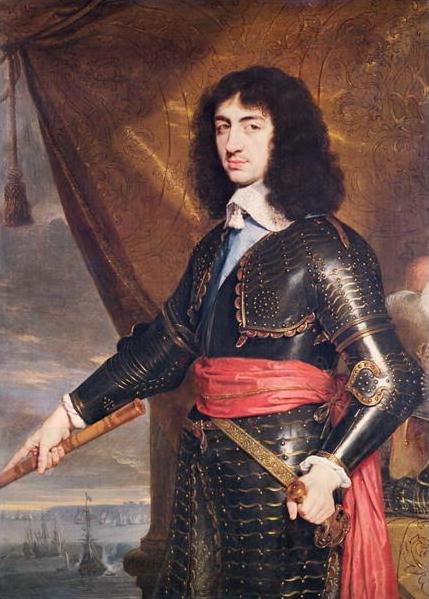
The Battle of Worcester took place on Wednesday 3rd September 1651 between a Royalist (mainly Scottish) army under the personal command of Charles Stuart (Charles II of Scotland) and the Parliamentary army under the command of Oliver Cromwell. 
 
Worcester was occupied by Royalist forces at the time of the battle. Cromwell launched a two-pronged attack on the city.  By the end of the day up to 4,000 Scottish soldiers were dead and up to 10,000 captured. Parliamentary losses are put at 200. The Royalist cause was shattered and Charles fled for his life. 
 
The battle was the final conflict of a series of civil wars that cost the lives of an estimated 100,000 civilians, some 3.7% of the country.
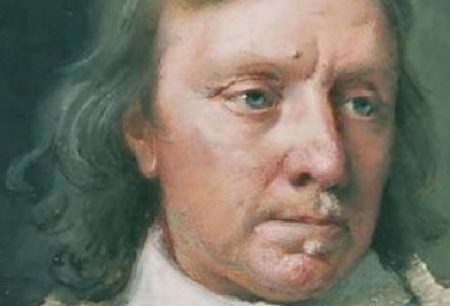
cromwell 02

The

Parliamentarians

On 22nd August 1642 relations between the King and Parliament had broken down completely and the King raised his Battle Standard at Nottingham Castle as a declaration of war against Parliament and began raising a Royalist army.  The country became divided with some supporting Parliament and others supporting the King.  

The Parliamentarians became known by the insulting name of ‘Roundheads’ due to their short, cropped hair rather than wearing their hair in the long flowing style of the Royalists. They were also known as ‘Rebels’ by the Royalists.   In 1645 Parliament raised a full time professional army known as the New Model Army, rather than the part-time Militia soldiers who were called out when needed. They were also known as the ‘Ironsides’ due to the armour they wore.

The

Royalists

The English or British Civil War took many years to build up.  A Parliament had operated in England since King John (buried in Worcester Cathedral) put his seal on the Magna Carte in 1215.

But it was unpopular with many Monarchs that followed.  In particular King Charles I (1625-1649) wanted to rule on his own and did not allow Parliament to sit from March 1629 to April 1640 in what later became known as his Personal Rule.  

The Royalists became known as ‘Cavaliers’ a Spanish name for a horseman. Many wealthy noblemen who dressed in fine clothes supported the King and brought many of their employees to the Royalist cause.
The Battle of Worcester Society

Step into History

Volunteer with the Battle of Worcester Society

Are you interested in history in general, and in 17th-century Worcester in particular?

Do you ever wonder about the people, places, and dramatic events that shaped this city during the English Civil Wars?

The Battle of Worcester was one of the defining moments in our national story, and you can help ensure it is never forgotten.

We are a very friendly, volunteer-run charity, and we are looking for someone to join our committee as:

Volunteer opportunity

Executive Committee Administrator

You don’t need previous experience, just enthusiasm, reliability, and an interest in 17th-century history.

You will be part of a supportive team, helping to share Worcester’s remarkable past through events, projects, and community engagement.

If you are curious and would like to learn more,

Please contact us.

Contact us

Help us keep Worcester’s history alive.

preloader